
One of the most common moments of panic for any piercing enthusiast is noticing redness, swelling, or pain around a new (or even healed) piercing. It’s easy to assume the worst and jump to the conclusion that you have an infection. However, in the vast majority of cases, what you’re dealing with is irritation, not infection.
Knowing the difference is crucial because treating the wrong condition can actually make things worse. In this guide, we’ll break down the symptoms, causes, and how to safely handle both.
Part 1: Piercing Irritation (The Common Culprit)
Irritation is your body’s way of saying it’s unhappy with its environment. It’s a mild inflammatory response, not a bacterial invasion.
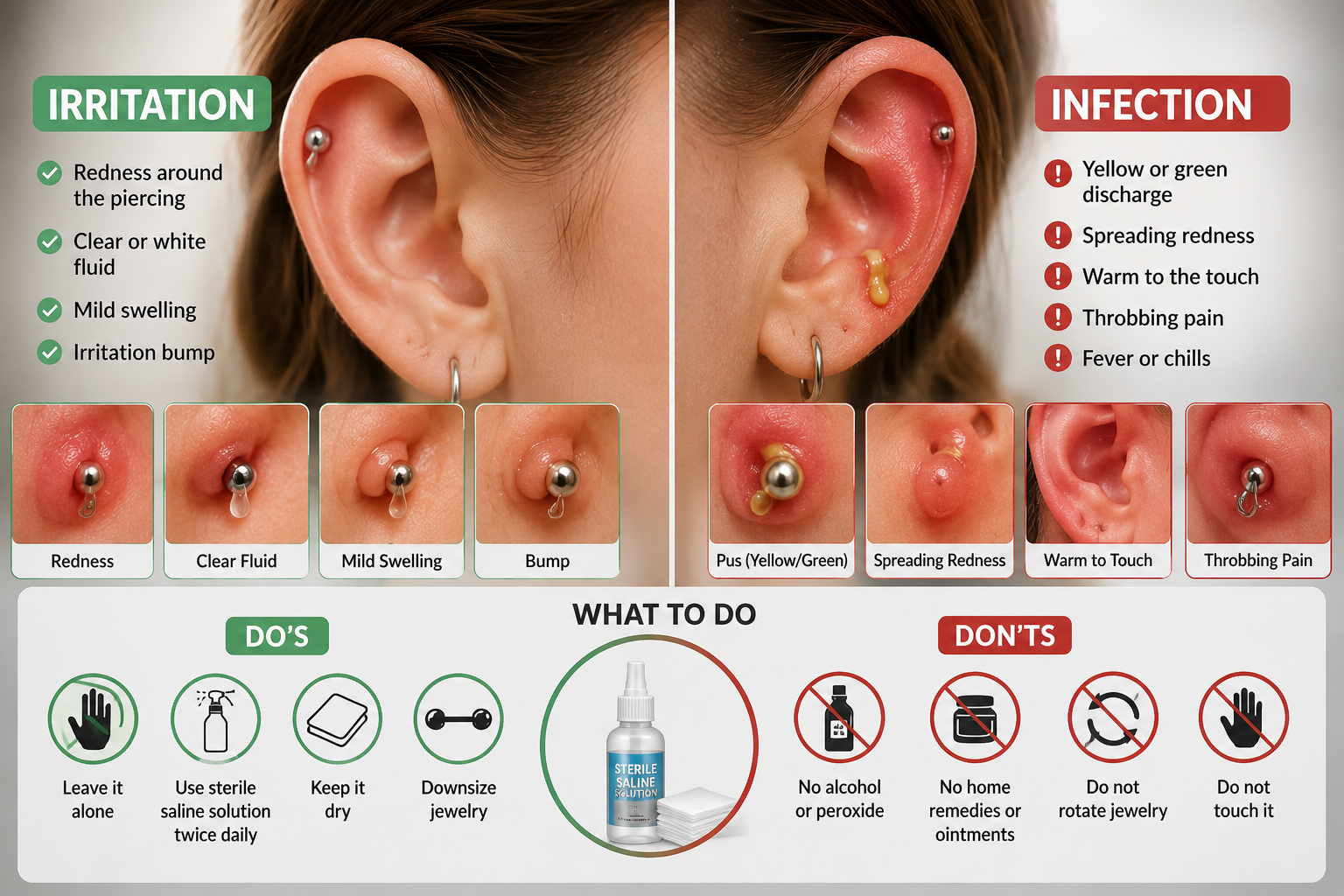
Common Signs of Irritation:
-
Redness: Usually contained immediately around the piercing hole.
-
Clear or White Fluid: This is lymph fluid, which is a normal part of the healing process.
-
Mild Swelling: A slight puffiness that fluctuates depending on how much you’ve moved or touched it.
-
The “Bump”: Small, firm bumps (often called irritation bumps) may appear near the entry or exit of the piercing.
Why Does It Happen?
-
Trauma/Physical Irritation: Sleeping on your piercing, bumping it with a shirt, or fiddling with the jewelry constantly.
-
Poor Jewelry Quality: Using materials containing nickel or other low-quality metals that trigger a reaction.
-
Harsh Cleaning Agents: Using alcohol, peroxide, or tea tree oil can strip away healthy cells and irritate the wound.
-
Improper Jewelry Style: Jewelry that is too tight (not leaving room for swelling) or poorly fitted.
Part 2: Piercing Infection (The Serious Condition)
Infections are caused by bacteria entering the wound, usually due to unhygienic practices or lack of aftercare.
Common Signs of Infection:
-
Yellow or Green Discharge: Pus that looks thick or cloudy is a major red flag.
-
Spreading Redness: Redness that travels away from the piercing site and looks “streaky.”
-
Heat: The area feels hot to the touch compared to the surrounding skin.
-
Throbbing Pain: A persistent, deep, or worsening pain that doesn’t go away.
-
Fever: If you develop a fever or chills, this indicates a systemic infection. Seek medical attention immediately.
Part 3: What to Do (The Do’s and Don’ts)
The Do’s:
-
The LITHA Method: “Leave It The Hell Alone.” The best way to fix irritation is to stop touching it.
-
Sterile Saline Solution: Use a sterile saline spray (0.9% sodium chloride) twice daily. Nothing else.
-
Keep It Dry: Gently pat the area dry with non-woven gauze after cleaning.
-
Downsize Your Jewelry: If you are past the initial swelling phase, visit a professional piercer to downsize your jewelry so it doesn’t snag.
The Don’ts:
-
Do NOT use Alcohol or Peroxide: These chemicals kill the good cells needed for healing.
-
Do NOT use “Home Remedies”: Avoid aspirin paste, tea tree oil, or any ointments (like Neosporin), which can block oxygen from reaching the wound.
-
Do NOT rotate the jewelry: Twisting the jewelry only drags bacteria back into the piercing channel.
When to See a Professional
If you’ve tried the LITHA method and kept your routine consistent for 48-72 hours with no improvement, or if symptoms get worse, go see your piercer or a doctor. A professional piercer can identify if your jewelry is the problem, while a doctor can determine if you need a course of antibiotics.
The Bottom Line
Most piercing issues are just temporary hiccups in the healing journey. By keeping the area clean, avoiding harsh chemicals, and minimizing physical trauma, you’ll be back on track to a healthy, happy piercing.
Disclaimer: This content is for informational purposes only and does not replace professional medical advice. If you suspect a serious infection, please consult with a healthcare professional.