
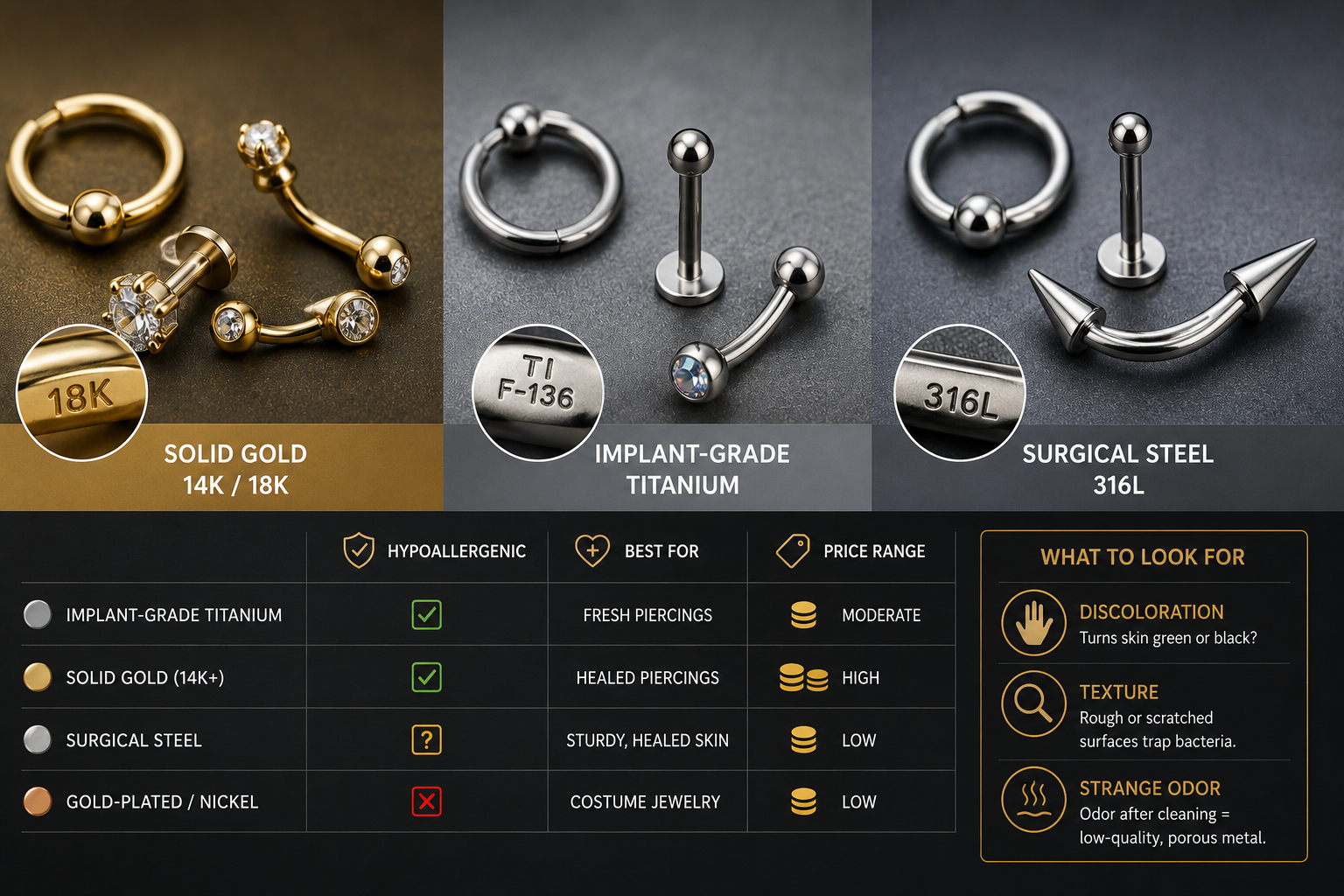
Choosing the right jewelry is arguably the most important decision you make after getting a new piercing. Many people assume all metals are created equal, but using the wrong material can turn a simple healing process into a nightmare of allergic reactions and prolonged irritation.
Whether you are getting your ears pierced for the first time or planning a new stack, here is everything you need to know to choose the safest metal for your skin.
1. Implant-Grade Titanium (The Gold Standard)
If you have sensitive skin or are prone to allergies, implant-grade titanium (specifically ASTM F-136) is your best friend.
-
Why it’s great: It is hypoallergenic, lightweight, and incredibly durable. It contains virtually no nickel, which is the most common metal to cause contact dermatitis.
-
Best for: Fresh piercings and people with metal sensitivities.
-
The Verdict: This is the top recommendation by professional piercers worldwide.
2. 14k or 18k Solid Gold (The Luxury Choice)
Not all gold is the same. Avoid “gold-plated” jewelry, which eventually chips and exposes the base metal underneath. Solid gold is the real deal.
-
Why it’s great: High-karat gold (14k or higher) is inert and safe for the body. It offers a beautiful, luxurious aesthetic that doesn’t fade.
-
The Caution: Be careful with gold that is 24k (too soft and scratches easily) or very low karat (contains too much of other alloy metals).
-
Best for: Healed piercings and long-term daily wear.
3. Surgical Steel (Proceed with Caution)
“Surgical steel” sounds safe because of the name, but it is often a misleading marketing term in the world of body jewelry.
-
The Reality: Surgical steel is an alloy designed for tools, not necessarily for long-term implantation in a fresh wound. Many surgical steel alloys contain nickel.
-
The Risk: If you have even a mild nickel allergy, surgical steel is likely to cause irritation, itching, or redness once the piercing is in place.
-
Best for: People with zero metal allergies and fully healed, “bulletproof” piercings (like older earlobe piercings).
Comparison Table: Which Metal Should You Choose?
| Material | Hypoallergenic | Best For | Price Range |
| Implant-Grade Titanium | Yes | Fresh Piercings | Moderate |
| Solid Gold (14k+) | Yes | Healed Piercings | High |
| Surgical Steel | Maybe | Sturdy, Healed Skin | Low |
| Gold-Plated/Nickel | No | Costume Jewelry | Low |
How to Test Your Jewelry
If you are unsure what your current jewelry is made of, look for these signs of poor-quality material:
-
Discoloration: Does the jewelry turn your skin green or black? That’s a sign of a cheap base metal.
-
Texture: Does the surface feel rough or scratched under a magnifying glass? Scratches trap bacteria and cause irritation.
-
The “Smell Test”: If your jewelry develops a strange odor even after cleaning, the metal is likely low-quality and porous.
Final Advice
For a fresh piercing, always insist on Implant-Grade Titanium. Once your piercing is fully healed, you have much more freedom to experiment with solid gold or other high-quality materials. Investing in quality jewelry now saves you the cost and pain of dealing with infections or allergic reactions later.
Disclaimer: This content is for informational purposes only and does not replace professional medical advice. If you have a severe reaction to a piece of jewelry, consult your local piercer or a doctor.